 Australian Native Plants Society (Australia)
General Description:
Banksia ornata is usually a rounded shrub up to 3 metres high. The leaves are up to 100 mm long and 20 mm wide and are of an elongated wedge shape with serrated edges. The cylindrical flower spikes 50-140 mm long by 60-120 mm wide are yellow or greenish yellow in bud, aging to bronze and, like all banksias, are attractive to honey-eating birds. Flowering occurs in winter and spring.
This species does not develop a lignotuber and is killed by fire. It relies on seed for regeneration.
Banksia ornata has been cultivated successfully in hot, dry climates but is less successful in cool or humid areas. It requires sandy, well drained soils in full sun or partial shade. It is is moderately frost hardy.
Propagation from seed is reliable without pre-treatment and cuttings also succeed but may be slow to strike and success rate may be well below 100%.
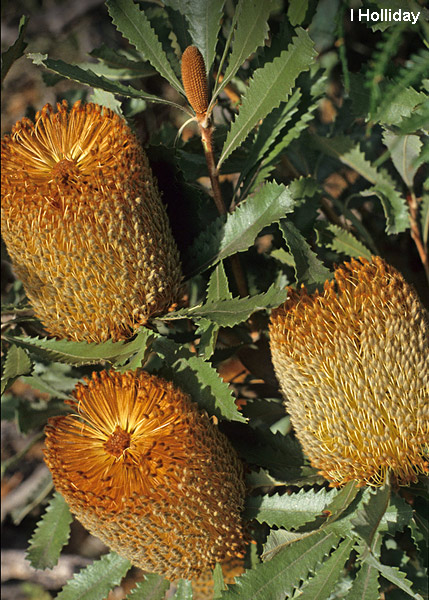
Banksia ornata
Photo: Ivan Holliday