 Australian Native Plants Society (Australia)
General Description:
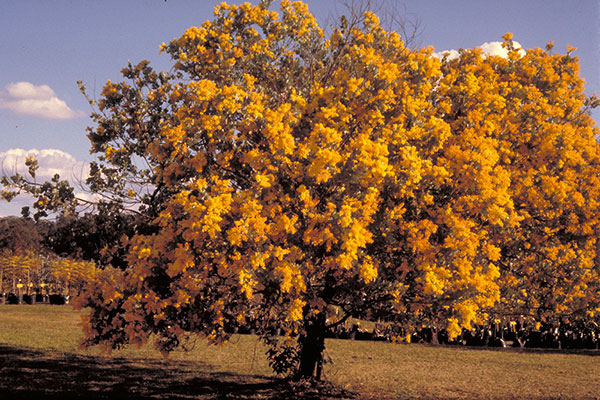
Eucalyptus phoenicea is a small tree to around12 metres with a slender trunk. Bark is yellow to yellow-brown, flecked, flaky and fibrous on the trunk, smooth and white or cream on upper branches. The adult leaves are lance-shaped with a long thin point, grey-green, 8-12cm x 1.2-2cm and have a flattened stalk. The beautiful bright orange flowers are borne in unusual spherical heads of 12 to 20 flowers. Flowering extends over a long period and a wide range of birds and insects find the flowers attractive
This is one of several colourful eucalypts of northern Australia. Others include E.miniata and Corymbia ptychocarpa. Because of its spectacular flowers and modest size, E.phoenicea is an excellent eucalypt for tropical and sub-tropical gardens. It requires an open position with good drainage. It is not suited to cooler, temperate climates. Under good growing conditions it is reported to flower in its second year from seed.
Propagation is from seed which germinates readily.
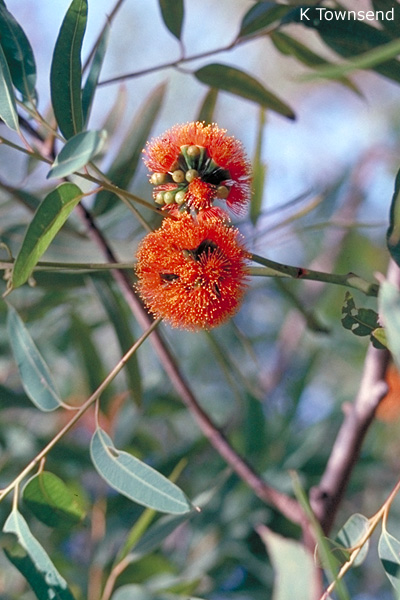
Eucalyptus phoenicea
Photo: Keith Townsend