 Australian Native Plants Society (Australia)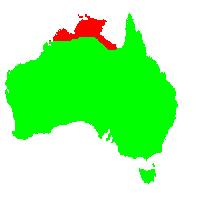
General Description:
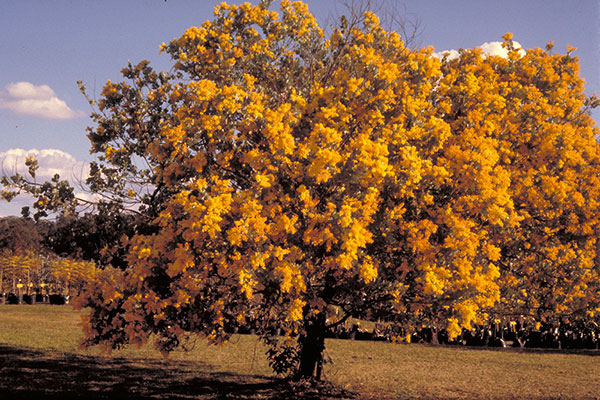
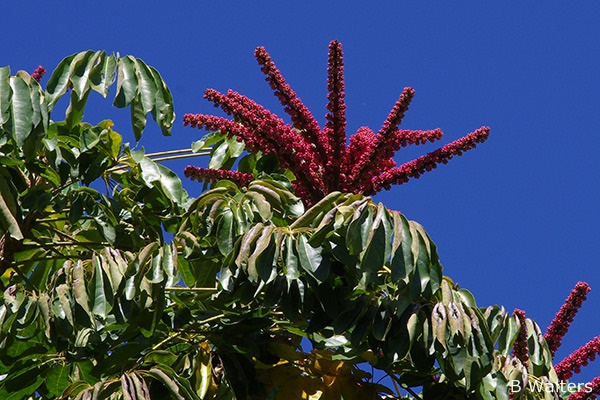
Grevillea heliosperma is an open spreading tree to 8 metres in height, mature trees having thick, rough, brown bark. Leaves are spreading and deeply lobed with leaflets often having the appearance of being simple leaves. The red flowers are produced in profusion in winter and spring, and are great bird attractors. There is some confusion with this species and G. decurrens, although they have a number of differing characters, and further taxonomic work may be needed to differentiate between the two
In cultivation, G. heliosperma appears to require a slightly acid soil and is suited to a monsoon climate with summer rain and a winter dry season. It does not tolerate hard water or alkaline conditions.
Propagation may be carried out from seed and germination is improved if the seed is carefully “nicked” with a sharp knife to expose the embryo. Propagation from cuttings is possible but may be unreliable. The species has been successfully grafted using Grevillea robusta as rootstock.
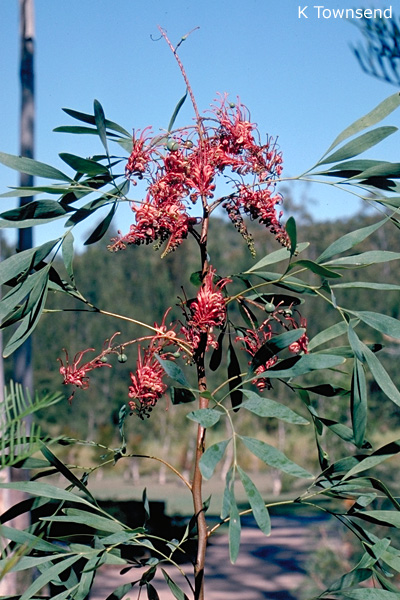
Grevillea heliosperma
Photo: Keith Townsend