 Australian Native Plants Society (Australia)
General Description:
Acacia terminalis is a very variable plant in habit, ranging from a small shrub about 1 metre in height to a small tree up to about 5 metres tall. It is one of those species which retain the fern-like, bipinnate foliage throughout their lives (in most other species, the bipinnate foliage is replaced by flattened stems called phyllodes). The pale to bright yellow flowers occur in conspicuous racemes and can be seen in autumn to mid-spring, depending on locality. A.terminalis was previously known as A.botrycephala.
A.terminalis is an attractive garden plant that grows quickly and flowers within one or two years from seed. It is reliable in a range of soils but is reported to be short lived due to attack by borers. However, it is easily propagated and readily replaced. It flowers best in full sun or dappled shade.
Propagation is relatively easy by normal seed raising methods following pretreatment by soaking in boiling water or by scarification. Cuttings may be successful but the percentage strike rate is likely to be low.
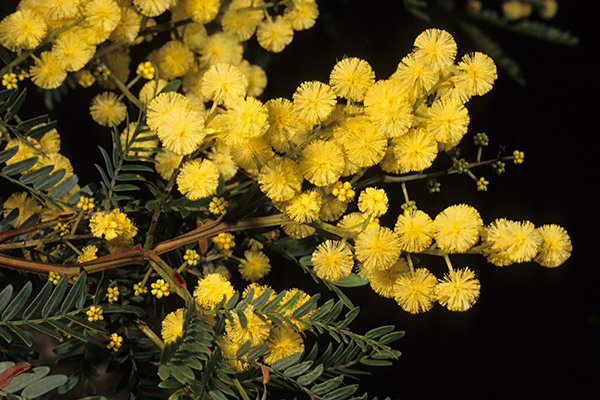
Acacia terminalis
Photo: Brian Walters