 Australian Native Plants Society (Australia)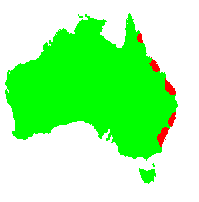
General Description:
Banksia robur is a small to medium shrub, 2 to 3m high and wide. The large leaves are stiff, leathery, egg-shaped, broadest at the tip, shiny above, dull beneath, margins toothed, 10-30cm x 6-10cm.
Heads of blue-green flower buds arise from the junctions of branches and form into dense greenish-yellow flower heads 6-15cm in length, changing to dull orange and brown with age. This species can flower from seed in 3 years and flowers can occur at any time of year but are most commonly seen in winter or early spring. Seeds are held in hairy, woody follicles which are retained on the plant for a considerable period.
The species will tolerate poor soils and poor drainage and has been used as a rootstock for less hardy species. It naturally occurs in wet areas (hence the common name) on sandy soils and appreciates extra water, especially when actively growing and during dry spells.
Propagation from seed is reliable.
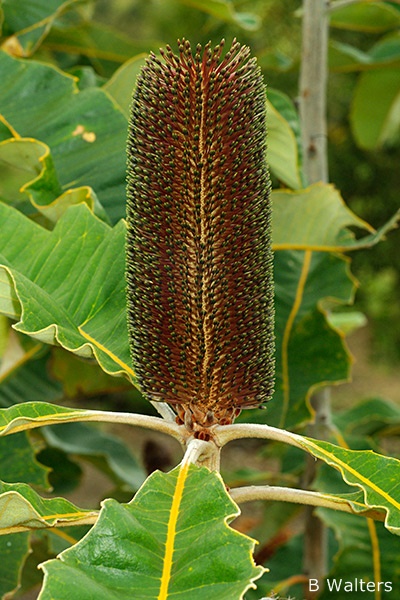
Banksia robur; flower buds
Photo: Brian Walters
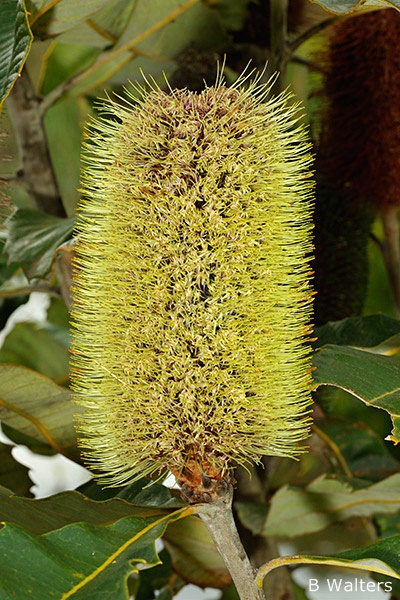
Banksia robur
Photo: Brian Walters