 Australian Native Plants Society (Australia)
General Description:
Melaleuca lateritia is one of the most widely cultivated members of the genus Melaleuca and is well established in general horticulture.
The species forms a small to medium shrub of upright growth habit to about 1.5 – 2 metres. The flowers occur in bottlebrush shaped spikes and are bright red to orange in colour. Flowering occurs in late spring through to mid summer.
The leaves are narrow, linear in shape and about 20mm long.
Although native to a dry summer climate M.lateritia is one of the more adaptable of the western species in the wetter summer conditions of Australia’s east coast. It requires a well drained, sunny position. The species responds to annual fertilising after flowering and to an annual light pruning to encourage a bushy shape.
Propagation is easy from both seed and cuttings.
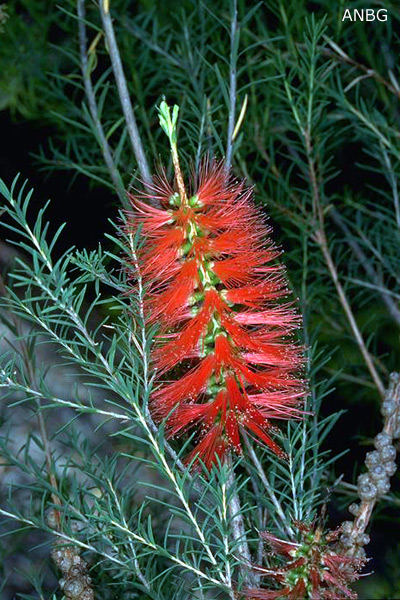
Melaleuca lateritia
Photo: Unknown – Australian National Botanic Gardens
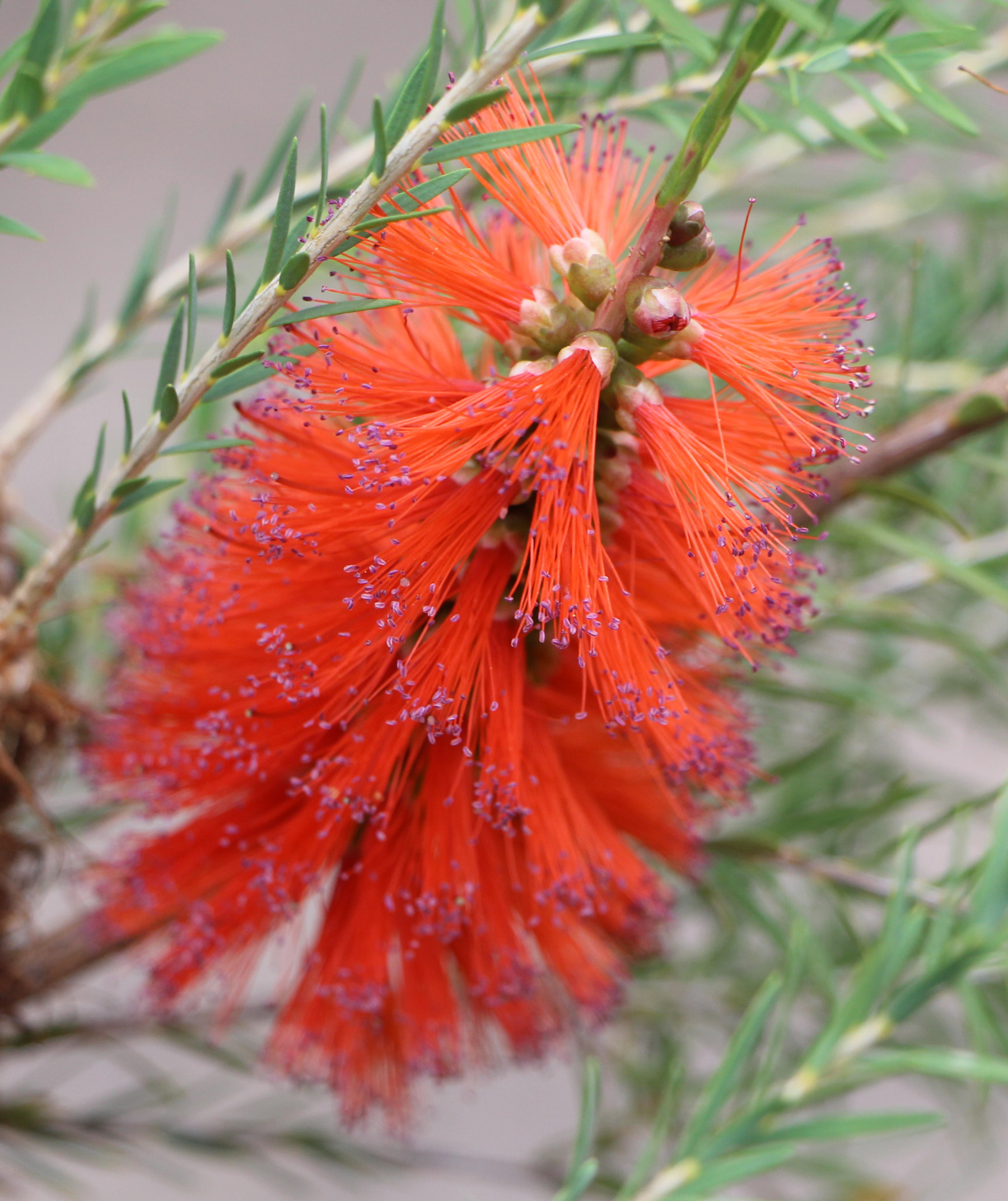
Melaleuca lateritia
Photo: Ben Walcott