 Australian Native Plants Society (Australia)
General Description:
Passiflora is a well known genus because of the commercial “passionfruit”, P.edulis. The genus is mostly found in tropical areas of America and Asia. There are three Australian species but there are also about a dozen other species which have been introduced to Australia and become naturalised.
Like most members of the genus, Passiflora cinnabarina is a tendril climber – it develops filament-like structures from its stems which attach themselves to branches of other plants, thus providing support. P.cinnabarina is a vigorous climber with tri-lobed leaves which are dark green in colour and up to 100 mm long. The red flowers are seen mainly in spring to summer. The flowers are about 50 mm in diameter and are followed by ovoid, greyish-green fruits about 30 mm in diameter containing greyish pulp and numerous black seeds. The pulp is edible but not especially palatable.
P.cinnabarina is a reliable garden plant in temperate to tropical. It is resistant to at least moderate frost, prefers moist, fairly rich soils, reasonable drainage and can be grown in full sun to semi shade.
The species is readily grown from seed which does not require any special pre-treatment. Propagation can also be carried out using cuttings of firm, current season’s growth.
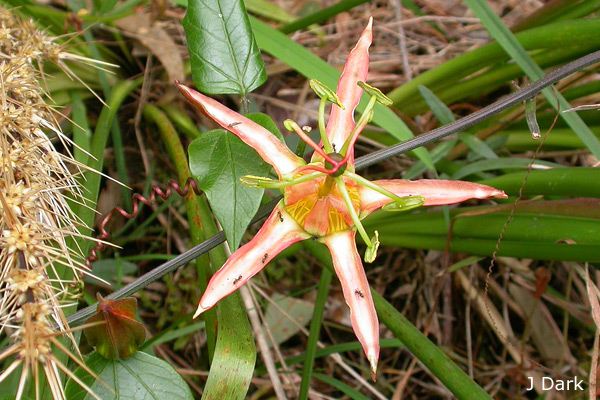
Passiflora cinnabarina
Photo: Jill Dark