 Australian Native Plants Society (Australia)
General Description:
Acacia leptostachya is a a variable shrub, with dense foliage and a rounded shape, usually about 2 metres in height, but occasionally to 5 metres. Young growth on both branches and phyllodes is hairy. Bark is dark grey and fissured.
Phyllodes are stiff, usually straight and narrow (although variable, particularly when juvenile), leathery, grey-green, 3-9 cm x 0.3-1 cm with many longitudinal veins.
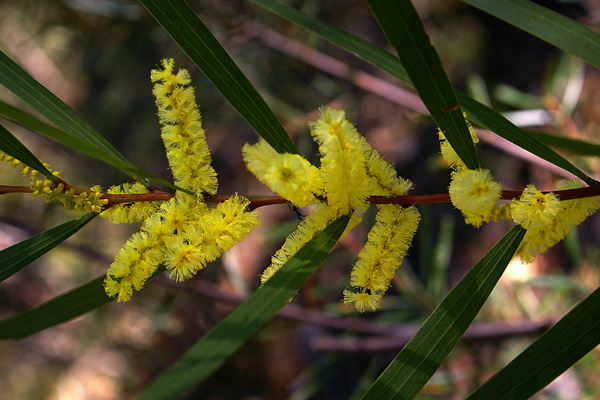
The golden yellow spike flowers, 2-4 cm long occur in pairs (occasionally more) in the leaf axils. Flowering period is June to August and is followed by narrow curved pods to 6cm in length with seeds either longitudinal or transverse in the pod.
The plant will do best in full sun, well drained soil and a generally dry position.
Propagation is relatively easy by normal seed raising methods following pretreatment by soaking in boiling water or by scarification.
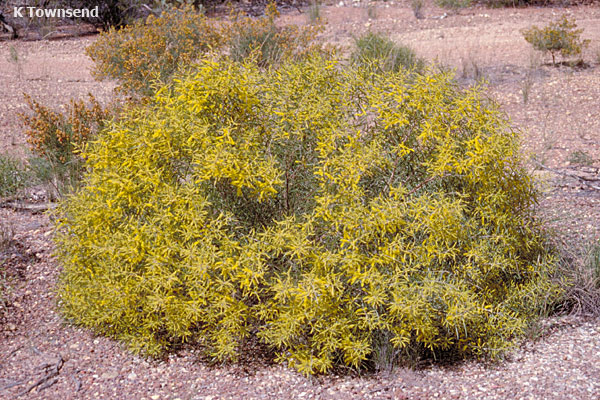
Acacia leptostachya
Photo: Keith Townsend
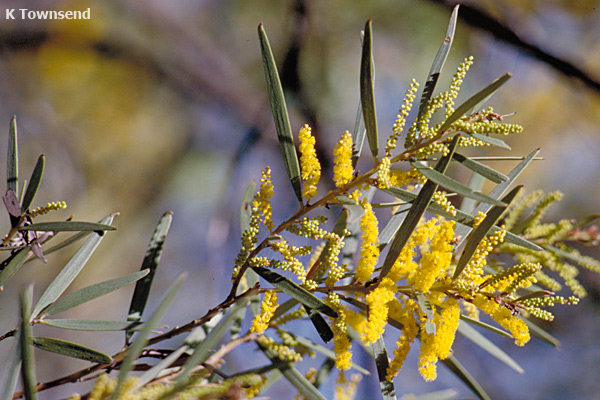
Acacia leptostachya
Photo: Keith Townsend