 Australian Native Plants Society (Australia)
General Description:
Grevillea parallela is a tall shrub or small tree, 2.5-15 metres high, with pendulous foliage. Bark is dark, hard and conspicuously furrowed. The laves are narrow, tapering to the base, dull green above, silky-hairy with 1-5 longitudinal veins beneath, 10-40 cm x 0.2-1.0 cm. Leaves may occasionally be divided into 2-6 narrow lobes.
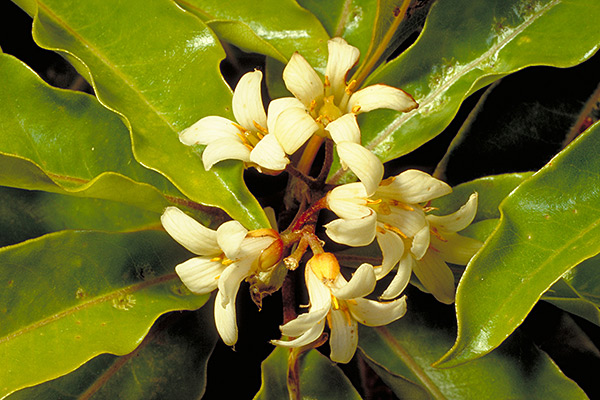
The cream to white flowers are perfumed, waxy, crowded and borne in cylindrical racemes 5-10 cm long, several racemes forming a crowded terminal panicle. Flowering period is from July to December. Two broadly winged seeds are borne in a rounded follicle 2-2.5 cm x 1.5 cm.
G.parallela is a very attractive tree which is rarely seen in cultivation. It flowers profusely if given extra water when buds are forming.
The species may be propagated from scarified seed. Cuttings are also reported to be successful.
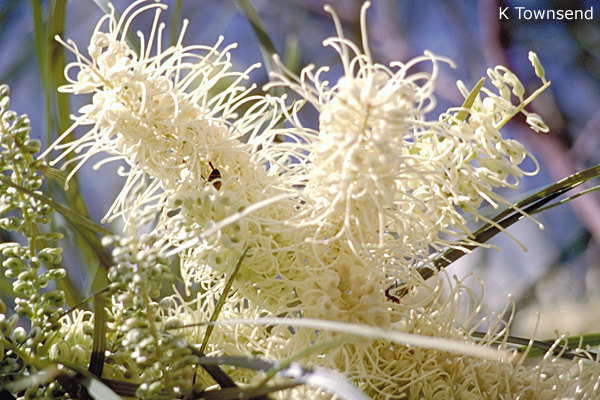
Grevillea parallela
Photo: Keith Townsend